- Home
- Ropes and Rigs
Notes on Ropes and Sailing Rigs.
Learn the ropes, what everyone who goes boating should know.

A basic knowledge about lines, as we boaters prefer to call them and knots is essential for every boater regardless of the size or type of boat.
Using the wrong knot or line could lead to trouble, while getting it right, will enhance your experience on and off the water.
The sensible boater also needs to know how to handle and store all that cordage so that it will be up to the job and ready for any eventuality.
Rope
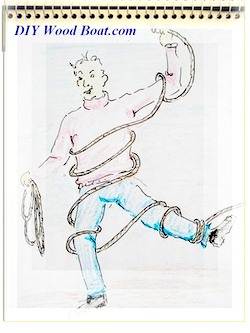
There are wide varieties of lines each with their own uses, as well as a wide variety of sizes and colors. There are four or five main materials used to make rope each with their own properties.
Manila is the traditional sort of line made from natural fibers. It is rarely seen on boats these days as natural fibers do not have the strength or durability of modern synthetics.
Polypropylene may
be cheap but it soon deteriorates in ultra violet light.
However it does float so could be used for rescue lines.
Polyesters such
as Dacron have high
strength they are flexible low
stretch and have good UV resistance.
Lines can either be braided or
stranded.
Stranded lines
are the traditional style
where three yarns are
twisted together.
Braided lines
have a core of braided or stranded
fibers encased within a braided sheath.
The core provides the strength while the sheath acts as a protective
layer.
Platted ropes such as multi-plat have are ideal for mooring and anchoring due to their strength and stretch.
More on Types of line construction.
It is important to keep your rope in good condition whatever the type or its function.
Your life could depend on it, besides it will last longer and save you having to buy replacements.
Always coil your ropes after use so they are ready for use next time you want them.
And hang the coils where they are handy for use but not getting in the way.
Do not forget to stop the ends from fraying with a whipping.
Knots
There are about five or six basic knots that everyone should know.
No big deal, anyone can learn to tie them with a little practice.
Practice is the key, keep a couple of short lengths of rope handy so you can practice when you have a spare moment.
Learn the ropes under ideal conditions then if you need a knot in an emergency you will be able to tie it correctly.
Besides you will look so much more competent.
There are three terms you will need to understand when learning a knot.
The 'bitter end ' is the end of the line where you are tying the knot.
The ' bight ' is the bend you make in the line.
The ' standing end ' is the long end of the line.
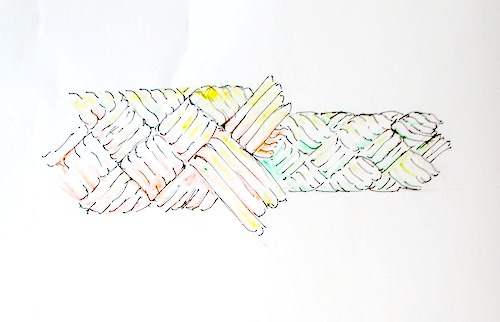
Splicing
A knot creates a weak spot in a line.
It is apparently due to the kinks in the rope.
However, different knots have differing effects on the strength of the rope.
So, splicing
is the best method of making a loop in a line.
While this too, according to the experts creates a weak spot it has
much less
effect than a knot.
Therefore,
where it is possible and certainly on any permanent bit of
rigging
the rope should be spliced.
Splicing
is not difficult it just takes a little bit of patience and
practice.
But the results are worth the little time needed.
Why pay someone else to do it for you when you can buy a ‘fid’, for a fraction of the cost and do it your self?
affiliate linksSailing Rigs
The
most common type of sailing
rig is the Bermudan sloop, that’s the one with two triangular sails one
in front and one behind the mast.
This is regarded as being the most efficient rig on all points of
sail.
However there are several other styles of rig which all have their own characteristics and good points.
Before choosing a particular rig consider carefully what sort of sailing you intend doing. How complicated do you want the rig to be?
Do you want to build it all yourself?
And do not forget to take into consideration the capabilities of your crew, that's if you have one.
- Basic Sail Shapes,
- Lug Rigs
- The Ballanced Lug
- The Dipping Lug
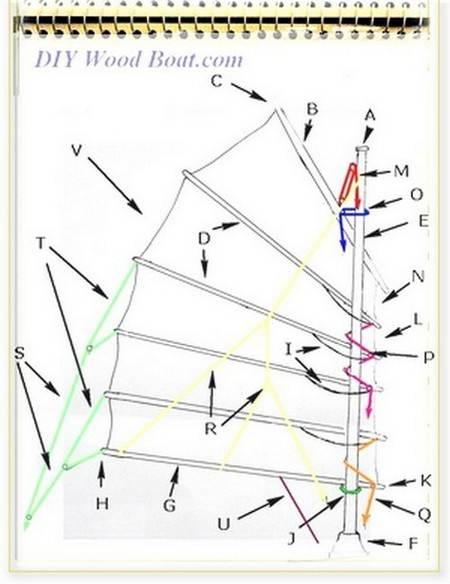
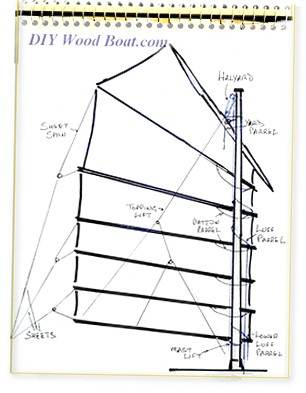
- The Chinese Lug Sail better known as the Junk Sail and how it is rigged.
- About Sail Cloth.

Chain
The only chain commonly found on modern boats is the anchor chain.
Chain is used not just for its strength but also for its weight.
The weight of the chain helps to keep the anchor lying at the correct angle on the seabed.
The size and weight of your anchor and chain will depend on the size of your boat.
The choice will also depend on how you intend to use the boat.
There are anchor types and styles to suit every eventuality and type of seabed.
Rigging Tackle
There are several bit of tackle which are used to increase the efficiency of rope-work.
- Blocks.
- Winches
- Shackles
- Thimbles
- Cleats.
- Fairleads
- Blocks and Tackle
- Handy Billy

Fenders and Covers
It is important to protect you pride and joy from as much damage as possible.
Fenders will eliminate any damage from rubbing on dock sides when tying up.
Many boats have a stout rubbing strake on the outside but these are rarely in the correct position for every dock or pontoon.
Besides it is preferable not to damage them unnecessarily.
Covers will protect the more vulnerable parts of your boat when not in use.
A sail cover will protect you sail from the elements and UV light.
A boat cover will keep you favorite boat free from dirt rain and moisture when you are not using it.
Covers should be waterproof but it is also important to allow for good ventilation to prevent condensation.
Safety
Always handle lines with care.
Never try to control a heavily loaded line with your bare hands.
I once lost the skin off both hands by instinctively grabbing at a runaway line, it was not funny at the time.
Taking two or more turns round a winch, cleat, or post will make it easier to control a line.
Be especially careful of the fine stuff such as fishing line.
Check and test any knot before relying on it.
Check all your lines closely for any signs of
fraying.
Make sure that the cleats and fairleads on the boat and on the dock have no sharp or rough areas that will cut or damage your lines.
Lines wrapped around cleats for any length of time are likely to fray.
Alter the lines occasionally so the wear is not constantly in one place.
Where lines are subject to wear they can be protected by parcelling (wrapping with a protective cover) or whipping .
affiliate linksNATIVE ASYNC

Previous posts
See What Others Have Posted
I think I found a Wooden Mast in My Garage
I think I found a wooden mast in my garage.
It's about 24' long and tapered.
The narrow end is about 2.5 inches diameter.
The wide end is about …

Recent Articles


-
Wooden Boat Events 2024
Apr 14, 24 05:15 AM
Wooden Boat Events 2024 calendar, traditional and classic boat festivals and regattas from around the world
“That's what sailing is, a dance, and your partner is the sea.
And with the sea you never take liberties.
You ask her, you don't tell her.
You have to remember always that she's the leader, not you.
You and your boat are dancing to her tune.”
(Michael Morpurgo)
You might like these
Whipping Boat Ropes
Whipping marine ropes to prevent the ends fraying, how to use whipping twine to prevent rigging and yacht ropes from untwisting.
Splicing Three Strand Rope.
Splicing, tips and techniques, three strand eyes and rope ends, make your own dock lines why pay for something you can easily do yourself.
Rope types
Rope types, what types, construction and materials to use on your boat when to use three strand and braided marine lines.
Knots for Sailors.
A brief description of and how to tie some of the most useful boating knots. Including some that every boater should know.
Handy Billy a traditional rope and sheave rig.
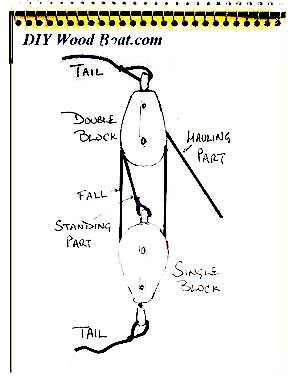
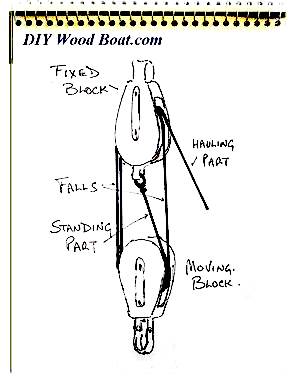
A Handy Billy made with two blocks and tackle can be used to give mechanical advantage wherever needed.
Blocks and Tackle lines and sheaves.
How Blocks and Tackle work to give mechanical advantage and how best to rig them.
Recent Articles
-
Wooden Boat Events 2024
Apr 14, 24 05:15 AM
Wooden Boat Events 2024 calendar, traditional and classic boat festivals and regattas from around the world -
14’ 1956 Chris Craft, side rail how should it be attached?
Apr 12, 24 03:38 AM
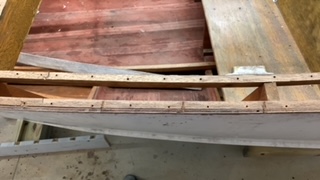
 Removing the old side rail most of the screws went between the top deck/skin 1/4” plywood and the side of the hull. See photo, is this correct? I would
 -
How to laminate plywood on the hull
Apr 10, 24 03:46 AM
I'm working on replacing the bottom of 18' 1969 runabout that has a deep-V plywood hull. It had a 1/2 mahogany plywood bottom that they somehow got to
You might like these
The Dipping Lug Sail
The dipping lug sail, is perhaps the most efficient and cheapest, type of sailing rig especially for small sailboats however it isn't as handy as the standing lugger or the balanced lugsail.
UV Strip for Furling Sails
UV Strip, notes on repairing, fitting and replacing a sacrificial UV protection strip on furling sails using acrylic or UV protected Dacron.
Sailing Rigs, a Guide to Sail Shapes.
The basic shape of the Sailing Rigs most commonly found on wooden sailing boats of every size.
Sail Cloth
About sail cloth and the different materials for DIY sail making and the average leisure sailor.
Sail Balance
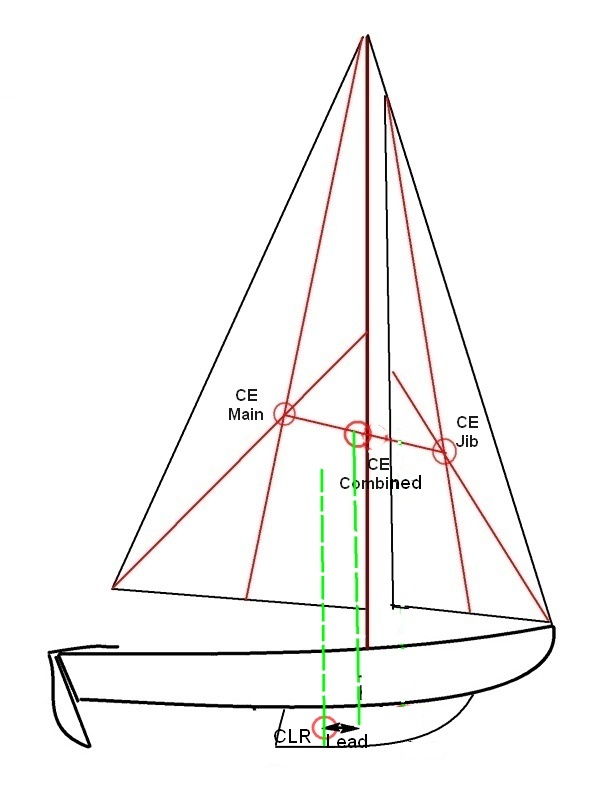
Notes on Sail Balance, designing a sailing rig, how set the relationship between the center of effort and the center of lateral resistance.
Lug Rigs for large and small sailboats.
Sailors have been using Lug Rigs for centuries because of their unique sailing abilities.
Junk Rig the ideal cruising sail.
How to rig a western version of the Chinese Junk Rig the basic lines and controls.
Junk Rig, How I Made My Own.
Junk Rig Sails How I built and rigged Mignonne with a Juk Sail
Junk Rig Conversion
Structural considerations for a Junk rig conversion of a wooden boat from bermudan rig to junk sail, where and how to site the mast.
Chinese Junk, the perfect cruising rig.
Chinese junk sail, why I rigged Mignonne with a Jukn Sail


This work is licensed under a Creative Commons Attribution-ShareAlike 2.0 UK: England & Wales License.
I am perfectly aware that the majority of Wooden Boat aficionados are sensible folk.
However, I need to point out that I am an amateur wooden boat enthusiast simply writing in order to try to help other amateur wooden boat enthusiasts.
And while I take every care to ensure that the information in DIY Wood Boat.com is correct, anyone acting on the information on this website does so at their own risk.