- Home
- Boat Building
- Restoration
- Cabin Cruisers
Notes on Fitting-out Wooden Cabin Cruisers.
Wooden Cabin Cruisers come in numerous styles and sizes.
Whether you are building one from scratch, renovating an old one or even buying one, there are also numerous ways in which the layout will determine her comfort and efficiency.
There are many advantages to building cabin cruisers from wood.
Condensation is much less of a problem than it is in a plastic boat.
They are much easier repair and alter.
And they feel and smell infinitely more pleasant than plastic.
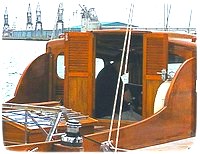
And there are as many reasons for wanting a cabin on your boat.
- Basic living amenities are built in.
- Perhaps like me you're getting too old to rough it.
- The shelter it will provide for the crew especially on a long trip.
- It can be locked up when you want to go ashore.
What size of boat should you go for?
Well that very much depends on you, but remember that the cost of keeping and maintaining her will increase exponentially with her size.
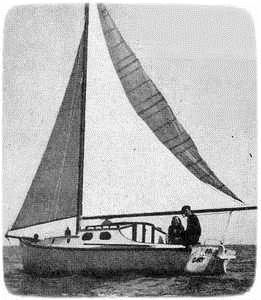
My first cabin cruiser was 17foot 6inches LOA (length over all).
Back then, when I was young I spent most of my weekends and holidays on her.
Now, I'm old I'm happier when I can stand upright in the cabin.
I bought that 'micro cruiser' from a family, husband, wife, two sons and a huge dog.
Yet they all enjoyed many years cruising together on her.
I'm not quite sure how they all fitted in but they did.
And they did it in style and had tremendous fun into the bargain.
Layout.
Whether you are building, restoring, or rebuilding the main consideration must be the integrity of the hull.
This is going to be a boat, not a country cottage, so it will need float and stay afloat.
However, right from the start you will need to consider how the interior is to be laid out.
Consider where you are going to put the bulkheads.
- These are important structural elements.
- They will determine the shape and size of the living spaces.
- They may need to be installed before the decks are laid.
- Looks
- Seaworthiness.
- And Comfort.
Click below for more on;
Bunks.
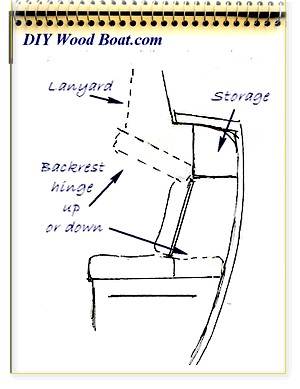
A great deal of creativity has been expended on fitting sleeping accommodation into cabin cruisers, especially small boats.
The recommended minimum sizes for bunks are
- 2ft (600mm) by 6ft 6in (2M) for single berths.
- 4ft 6in (1.4M) by 6ft 6in (2M) for doubles.
But these are based on some mythical average person.
My bunk on Mignonne is as long as I am tall plus a bit.
And it's much wider at one end than the other because of where it is situated within the shape of the boat.
If you are going to have a foam mattress then it wants to be
- good quality foam.
- and preferably closed cell to eliminate moisture retention.
However, a mattress is not necessary for comfort.
A well designed pipe-cot can be just as comfortable.
Space saving bunk building ideas.
Galley.

Plastic boat manufacturers spend hours designing cabin cruisers around the
galley , their aim is to please the 'little woman'.
If you are a 'little woman' then I suggest you stop reading this and go buy a plastic bath tub.

For those with a practical appreciation for the need to eat on board
consider,
- how many people are you going to cater for?
- do you need to create complicated dishes?
- do you intend to cook while under way?
- how much space is there available?
- and do not forget the cook, will this be a safe comfortable place to work?
Once you have a reasonable idea of your needs and desires you can begin to consider the components of you galley.
- What sot of galley stove will you need?
- And what fuel will you use to run it?
- How will you store water and how will you supply this to the galley?
- How will you store food and utensils?
- Will you need and have you space for refrigeration?
- Remember to allow adequate ventilation.
Heating.
For those of us boating in colder climes a cabin heart can be a godsend at times.
There are several very efficient compact heaters specially made for installation on cabin cruisers.
It is also possible to make your own wood burning stove or charcoal burner.
More about that coming later.
Heads
Everyone is going to need to use the heads at some time, regardless of how 'blue' their blood may be.
In the 'good old days' everything went overboard.
Being a member of the 'bucket and chuck it' brigade used to be something to boast about.
These days there are many areas where it is not only undesirable but actually illegal to just dump your waste.
The simplest solution is to fit a chemical / cassette toilet.
For the men on board, if you do insist on peeing over the side remember its one hand for yourself and one for the ship.
Apparently the American Coast Guards have an acronym used to describe a certain type of body found at sea. FWFO, Found With Flies Open.
Recommended minimum sizes for heads.
"Sailors, with their built in sense of order, service and discipline, should really be running the world."
(Nicholas Monsarrat)
Storage.
Storage
on board a cabin cruiser, unlike storage at home will have to cope with being within a moving environment.
- Keep the cabin tidy
- Keep your possessions safe and prevent breakages.
- Store stuff like safety equipment, binoculars and such like where they can be grabbed quickly.
- Keep the cabin a clear safe space while under way.
There are innumerable nooks and crannies within a boat cabin which can be usefully used for storage.
You must also consider the trim of your boat when deciding where stuff is to be stored.
When planning the storage space try to place most of the weight amidships.
Use the fore peak and stern lockers for lighter objects.
And spread the weight evenly either side of the centreline.
Lighting Cabin Cruisers.
If you intend to use your cabin cruiser at night, and of course that is perhaps the whole point, then you will need to think about lighting.
- Navigation lights which comply with the COLREGs (Convention on the International Regulations for Preventing Collisions at Sea) for your own safety as much as anyone else's.
- Chart table light so you can read your charts at night without unduly affecting your night vision.
- Compass light.
- Cabin lighting.
LED low power lighting applications.
These are ideal for use by boat owners, and they are becoming increasingly cheap.
But there is nothing to compare with the soft warm glow of a gambled oil lamp, a nice polished brass one, swaying with the boat, casting flickering shadows, the light reflecting from glowing, polished wood.
Ok, so maybe I am a silly old romantic I do not care, I know what gives me pleasure.
Electrics.
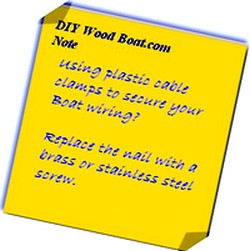
Electrical systems are not essential on board cabin cruisers.
But, by golly they do make life so much more convenient and above all safer.
When they are working that is.
Apart from the items we run on dry cell batteries such as torches moat or boat electrical equipment runs on 12 volts.
Most boat systems have two batteries.
- A cranking battery for engine starting.
- A separate deep cycle battery for 'domestics'.
And of course the batteries will need to be charged up.
Normally, for cabin cruisers at sea, this is done by the engine powering an alternator.
How complex your systems and how much you rely on electrical power should be governed by how much of an electrical geek you are.
The less you know the less you should rely on it.
And the more electrics on board the greater will be your need for
Anodes
to protect all the metal fastenings etc.
The importance of and how to build a Battery Box for cabin cruisers.
NATIVE ASYNC

Previous posts
See What Others Have Posted
Next - - -The Cabin
There will come a time (wont there ?) when I finish the re-planking work on my clinker built ex-onboard lifeboat,I will then move on to re-designing and …

Recent Articles


-
Wooden Boat Events 2024
Apr 14, 24 05:15 AM
Wooden Boat Events 2024 calendar, traditional and classic boat festivals and regattas from around the world
You might like these
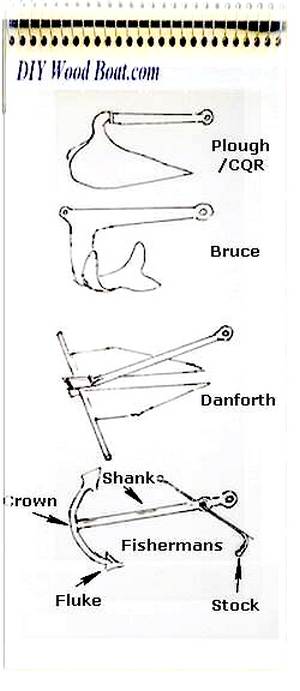
Anchor Types
Anchor types, how to choose the type, size and style of ground tackle, chain and rode to anchor your boat safely.
Cruising in Wooden Boats, the Eco Lifestyle
Freedom wooden boat Cruising, adventure, boat handling, navigation safety for wood boat builders.
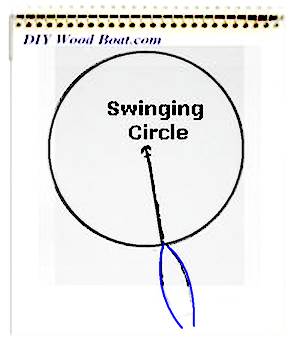
Anchoring Techniques
Anchoring techniques, best practices to ensure the safety of you and your boat, and how to retrieve a snagged hook.
DIY Boat Yards
DIY boat yards, do you know of or are looking for facilities and hard standing where wooden boats are welcome and where owners can do their own thing free from bureaucratic harassment.
Passage Planning for Small Boat Cruising
Passage Planning, a concise and easily understood cruise plan, for any of voyage from a dinghy trip around the bay to, cruising boat navigating an ocean.
Free Energy
Free Energy, electricity on board your boat and battery charging from the wind or solar a comparison.
Wind Vane Self Steering Gear for Sailboats
Wind vane self steering, what you need to know if you want to make your own windvane for singlehanded and shorthanded sailing on your wooden sailboat.
Foraging for Shellfish
Foraging for Shellfish, the original fast food, for taste, nutrition and availability, edible seafood from the seashore is hard to beat.
Overcoming Seasickness
How to overcome seasickness, mal de mer or motion sickness a review of some of the remedies, medications and natural precautions.
Edible Seashore Plants and Seaweed
Edible Seashore Plants and Seaweeds are free for the forager to gather, they tasty, nutritious foods that provide the perfect accompaniment to any seafood dish.




Recent Articles
-
Wooden Boat Events 2024
Apr 14, 24 05:15 AM
Wooden Boat Events 2024 calendar, traditional and classic boat festivals and regattas from around the world -
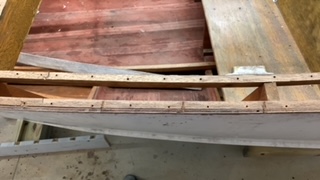
14’ 1956 Chris Craft, side rail how should it be attached?
Apr 12, 24 03:38 AM
 Removing the old side rail most of the screws went between the top deck/skin 1/4” plywood and the side of the hull. See photo, is this correct? I would
 -
How to laminate plywood on the hull
Apr 10, 24 03:46 AM
I'm working on replacing the bottom of 18' 1969 runabout that has a deep-V plywood hull. It had a 1/2 mahogany plywood bottom that they somehow got to
You might like these
Free Motorboat Plans
Free Motorboat Plans for the backyard home builder, build your own speed boat, cabin cruiser, runabout or utility boat using these simple plywood designs.
Wooden Boat Kits.
Wooden boat building is easy and inexpensive with wooden boat kits. From row boats and kayaks to sailing cruisers, boat to be proud of
Supplies for Wooden Boat building and Maintenance
Supplies for Wooden Boat Building and restoration, how to choose the materials and marine chandlery for your project.
DIY Woodboat Questions
Woodboat questions and answers forum for all Wooden Boat owners, advice and opinions on all aspects of wooden boat building, restoration and maintenance.
Small Boats, Made of Wood
What Everybody ought to know about building Small Boats, guidance and tips for self-building or restoring.
Sailboat Plans
Free Sailboat Plans for the backyard home builder, build your own wooden sailboat using these simple plywood designs.
Rowing Boat Plans
Free Rowing Boat Plans for the backyard home builder, build your own rowing boat, dory, folding dinghy or pram using these simple plywood designs.
You might like these
Anchor Types
Anchor types, how to choose the type, size and style of ground tackle, chain and rode to anchor your boat safely.
Cruising in Wooden Boats, the Eco Lifestyle
Freedom wooden boat Cruising, adventure, boat handling, navigation safety for wood boat builders.
Anchoring Techniques
Anchoring techniques, best practices to ensure the safety of you and your boat, and how to retrieve a snagged hook.
DIY Boat Yards
DIY boat yards, do you know of or are looking for facilities and hard standing where wooden boats are welcome and where owners can do their own thing free from bureaucratic harassment.
Passage Planning for Small Boat Cruising
Passage Planning, a concise and easily understood cruise plan, for any of voyage from a dinghy trip around the bay to, cruising boat navigating an ocean.
Free Energy
Free Energy, electricity on board your boat and battery charging from the wind or solar a comparison.
Wind Vane Self Steering Gear for Sailboats
Wind vane self steering, what you need to know if you want to make your own windvane for singlehanded and shorthanded sailing on your wooden sailboat.
Foraging for Shellfish
Foraging for Shellfish, the original fast food, for taste, nutrition and availability, edible seafood from the seashore is hard to beat.


This work is licensed under a Creative Commons Attribution-ShareAlike 2.0 UK: England & Wales License.
I am perfectly aware that the majority of Wooden Boat aficionados are sensible folk.
However, I need to point out that I am an amateur wooden boat enthusiast simply writing in order to try to help other amateur wooden boat enthusiasts.
And while I take every care to ensure that the information in DIY Wood Boat.com is correct, anyone acting on the information on this website does so at their own risk.