- Home
- Your Boats
- Seasickness
Overcoming Seasickness
The one sure fire way to avoid seasickness is to stay away from boats.
This form of motion sickness can affect anyone, even the most hardened sailors.
While ‘Mal de Mer’ may not be life threatening, the nausea can be so extreme that the victim often wishes it were.
Fortunately, the worst effects can be avoided with a few precautions, by understanding the causes and if necessary taking some medications.
Symptoms
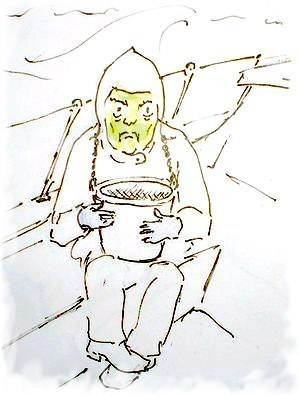
Motion
sickness can affect anyone who has normal inner ear balance
function.
Even those of us who, like me, seem to have been born with their sea
legs, can be affected while out on the water.
Unfortunately, there is no sure-fire way that I know of to totally
avoid seasickness, but there are some precautions that you can take to
minimize the effects.
First thing is to recognise the symptoms for what they are.
Even though you feel extremely nauseous you are not really ‘sick’, you
are just out of balance.
Sea-sickness like any motion sickness is caused by the balance centre
in
your inner ear recording the unfamiliar motion, while your eyes are
telling your brain that the world is stable.
The nausea is the result of this confusion.
One of the first signs is feeling drowsy.
This won’t necessarily develop into full scale nausea, in fact many
people do actually suffer from mild seasickness without realizing it.
The next stage after the sleepiness is mild the nausea.
This can be kept in check by following the precautions I have listed
below.
However, for those unfortunate enough, the symptoms will escalate,
nausea can become extreme, followed by dizziness, headaches, cold
perspiration and the dreaded vomiting.
And it certainly doesn’t help you feel any better if everyone else on
board is perfectly comfortable and happily enjoying the ride.
If you have a seasickness remedy that works for you please share it in the comments box below.
Precautions
We have all read the stories and advice about seasickness clearing up
after three or four days at sea.
While they may be true they are not very reassuring for those who just
want to enjoy a day on the water, or I suspect for the long voyager on
the first day of sickness.
The few times when I have felt nauseous on board it has mainly been due to the combination of the motion plus over indulging the evening before.
So, for anyone but especially those who are prone to motion sickness,
precautions should start well before going aboard.
Avoid eating anything that is inclined to cause a stomach upset such as
fried or spicy foods and allow plenty of time for it to be digested
before sailing.
Get plenty of rest and avoid partying too hard the night before, a hangover is bad enough without exacerbating it with motion sickness.
While you should avoid drinking too much alcohol do drink plenty of the
other stuff.
And stay hydrated while on board.
Just as ballerinas have a trick to stop them becoming dizzy so we
boaters can help reduce the chances of seasickness.
Once on board you will be less likely to feel the worst effects of
seasickness if your eyes are seeing what your ears are feeling.
This is why going below is not such a good idea.
Laid on a bunk, the interior of the cabin will appear to your eyes be
steady when your ear is saying that you are anything but.
The same goes for reading a book, spending more than a few moments
looking at the charts, the compass or through binoculars.
Try to keep your eyes, working to interpreting the motion of the boat
and the waves, at the same time keeping your peripheral vision
out on the horizon and not staring at objects that your eye
will interpret as being stable.
Find the position on the boat where there is least motion but at the
same time allows you to see the horizon, this will normally be low down
in the cockpit.
While being out there in the fresh air is good, it is vitally important
to
keep warm.
Try to loosen up and allow your body to roll with the boat.
Take some deep breaths.
And try to keep busy, anything you feel up to doing will help distract
you from your discomfort.
If you feel drowsy a nap might help but don’t lie down or go below, find somewhere in a corner of the cockpit where you can sit, wedge your self and keep well wrapped up.
affiliate linksSeasickness Remedies
There is a plethora
of ‘remedies’ on the market, but as I have
never had to take any I’m not in a position to recommend any.
On
the other hand, anyone who is inclined to suffer may find that one of
these remedies is the answer to enjoying time on the water.
Some of the medications can be bought other over the counter others
require a prescription from your doctor.
Stick-on scopolamine patches usually require a doctor's prescription.
The majority of these medications cause drowsiness and a dry mouth.
As with any medication the instructions for their use should be read
carefully and they should be taken with care.
Usually they should be taken well before you leave land so that they
have enough time to take effect.
There are also some herbal remedies containing ginger which
are reported to have a beneficial effect.
And then there are the wrist bands which use acupuncture pressure
points and are claimed to help some people.
Fortunately
the symptoms soon disappear when your system learns to compensate for
the swaying and pitching of the boat, though that my take a day or two.
On the other hand when you do go ashore you my have to regain your ‘land legs’ before you can adjust to being on terra firma again.
Please comment if you have tried any of these remedies.
Previous posts
See What Others Have Posted
Directions for sea band ginger gum
There are no directions on the sea band gum saying how often it can be taken.
Back to "Overcoming Seasickness"

Recent Articles


-
The Sliding Bevel
Jun 19, 25 02:52 AM
 By Robin Gates
The Sliding Bevel: A Boatbuilder’s Tool for Precision
For angles other than the perpendicular of the try-square and 45 degrees of a mitre-square, the essential measuring tool is a slidin…
“She found out that having something to do prevented you from feeling seasick, and that even a job like scrubbing a deck could be satisfying, if it was done in a seamanlike way.
She was very taken with this notion, and later on she folded the blankets on her bunk in a seamanlike way, and put her possessions in the closet in a seamanlike way, and used 'stow' instead of 'tidy' for the process of doing so.
After two days at sea, Lyra decided that this was the life for her.”
(Philip Pullman)
You might like these
Cold Water Boating
Safety precautions for cold water boating and winter sailing
How to Mooring Your Boat.
Avoid embarrassment when Mooring and Docking, learn how to get it right safely with the correct lines and at least appear competent.
Anchor Types
Anchor types, how to choose the type, size and style of ground tackle, chain and rode to anchor your boat safely.
Anchoring Techniques
Anchoring techniques, best practices to ensure the safety of you and your boat, and how to retrieve a snagged hook.
Boat Winches
Boat Winches, sheet, anchor, halyard and trailer winches for Wooden boats

Recent Articles
-
The Sliding Bevel
Jun 19, 25 02:52 AM
By Robin Gates
The Sliding Bevel: A Boatbuilder’s Tool for Precision
For angles other than the perpendicular of the try-square and 45 degrees of a mitre-square, the essential measuring tool is a slidin…
-
Winter Bilge Issues
Jun 18, 25 07:34 AM
 By Adrian Morgan
Winter Bilge Issues: Can a Classic Boat Spend Too Long Ashore?
Beware the score of too long ashore, Adrian Morgan warns us…
Continue reading "Winter Bilge Issues"
-
How to Make Multipurpose Wax Oil
May 13, 25 02:37 AM
 By Robin Gates
How to Make Multipurpose Wax Oil: Guide for Boat Builders
A Guide for boatbuilders on how to make multipurpose wax oil serving to lubricate tools and inhibit rust…
Continue reading "How…



This work is licensed under a Creative Commons Attribution-ShareAlike 2.0 UK: England & Wales License.
I am perfectly aware that the majority of Wooden Boat aficionados are sensible folk.
However, I need to point out that I am an amateur wooden boat enthusiast simply writing in order to try to help other amateur wooden boat enthusiasts.
And while I take every care to ensure that the information in DIY Wood Boat.com is correct, anyone acting on the information on this website does so at their own risk.