- Home
- Your Boats
- Knots
Knots Every Boater Should Know.
Here are a few of the most useful knots which any boater should have a working knowledge of.
Don’t be a lubber, learn to tie your lines correctly.
I have included links, at the bottom of the page, to a
couple of sites
with
animated instructions, just in case you find my drawings confusing.
There are a couple of terms which are used when describing how to tie
them.
- The Bitter End is the end of the rope which you are working with when tying.
- The Bight is a loop or bend which you you make in the line.
Round turn and two half hitches.
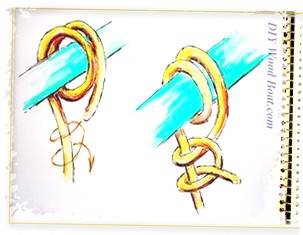 Round turn and two half hitches
This is a handy and simple way to quickly tie up to a mooring ring or stanchion.
Just remember it is a full round turn before the two half hitches.
The anchor hitch is a variation on this, where the bitter end goes under the round turn before making the two half hitches.
affiliate linksClove hitch.
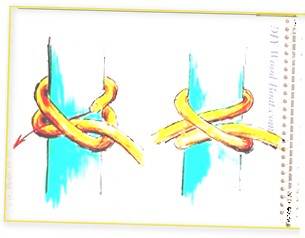 Clove hitch
This is a quick hitch for tying a rope around a post or spar.
It can be used to tie fenders as it is easy to adjust.
Figure of eight.
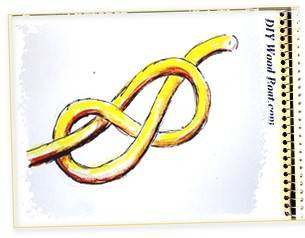 Figure of Eight
Put
a figure of eight on the end of all
your running
rigging to prevent the ends running out through blocks or cars.
Reef or Square knot.
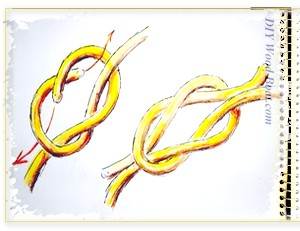 Reef/Square Knot
Traditionally used when tying up reefed sails to their spars.
This is a neat tie which works well under tension.
Do it properly otherwise you will end up with a granny knot which is pretty useless.
Sheet bend.
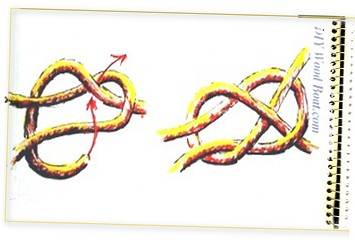 Sheet Bend
This is the way to tie two dissimilar types of rope together.
It is especially useful for differing thicknesses of rope.
Cleat hitch.
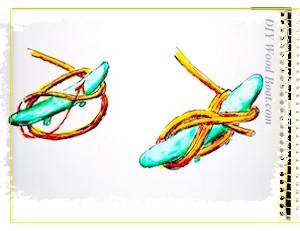 Cleat Hitch
When cleating off always take a full turn around the base of the cleat before starting he figure of eights.
The normal method of locking the turns is to pass the bitter end under the top strand.
However if you finish with a full turn then jerk on it, the bitter end will lock itself under the turns.
This will be just as secure as a locking turn and be simpler to un-cleat.
Bowline.
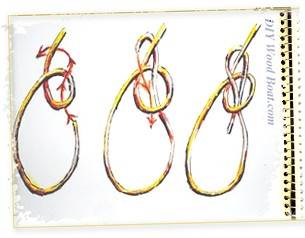 Bowline
If you can’t tie a bowline then you can’t call yourself a sailor.
It is quite quick and easy once you get the hang of it.
This is the best way to tie a loop which doesn’t slip or jam.
You will find innumerable uses for it.
Rolling hitch.

This is similar to the clove hitch but with at least one more turn.
It is useful for taking the strain off another line.
It will easily slide along in the direction of the bitter end but will jam when pulled from the other direction.
The Zeppelin Bend
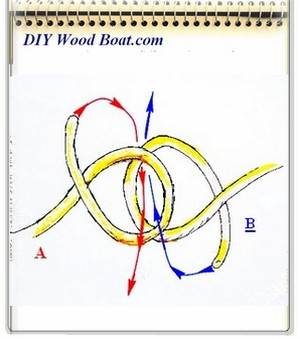 Zeppelin Bend
Here is a much neglected method for tying two ropes together.
Not only is it easy to tie but it is very secure, both under load and slack.
It is jam proof and can be used to tie differing ropes together.
I'm told that it is so called because it was the preferred knot used to tie down the airships of that name.
Make a bite (loop) in the bitter end of each rope.
Loop A with the bitter end on top and loop B with the bitter end below.
Place loop A on top of loop B.
The bitter end of A then goes up through the center, the bitter end on B goes over and down through the center.
Pull tight and you've got a secure neat symmetrical knot.
The
Prusik Knot
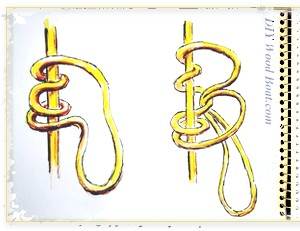
This is another friction hitch.
It is, apparently used mainly by climbers.
I have climbed my mast using two strops tied with prusiks to the main
halyard.
Stand in one loop as you push the other up the halyard then reverse the procedure.
It isn’t easy but it does work.
I've shown it here as a closed loop but it doesn’t have to be a loop
and the knot can be used in many other situations where a friction knot
is required.
The advantage of the prussic is that it is easy to tie and will slide
easily in either direction until pressure is applied to the loop.
It is tied by wrapping the loop around the ‘halyard’ several times and then back through the centre of itself.
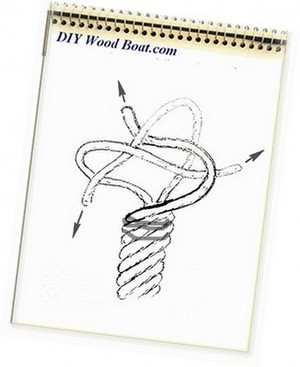
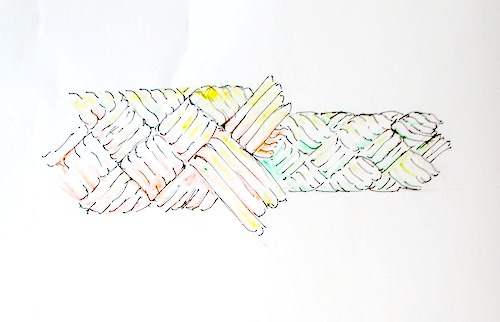
Turk's Head.
Books


There are some things that cannot be learned quickly, and time, which is all we have, must be paid heavily for their acquiring.
They
are the very simplest things, and
because it takes a man's life to know them, the little new that each
man gets
from life is very costly and the only heritage he has to leave.
(Ernest
Hemingway)
You might like these
Ropes and Rigs for Boating.
Boating ropes and rigs, knots, sailing, line handling and line care, what all boaters need to know.
Whipping Boat Ropes
Whipping marine ropes to prevent the ends fraying, how to use whipping twine to prevent rigging and yacht ropes from untwisting.
Splicing Three Strand Rope.
Splicing, tips and techniques, three strand eyes and rope ends, make your own dock lines why pay for something you can easily do yourself.
Rope types
Rope types, what types, construction and materials to use on your boat when to use three strand and braided marine lines.
Blocks and Tackle lines and sheaves.
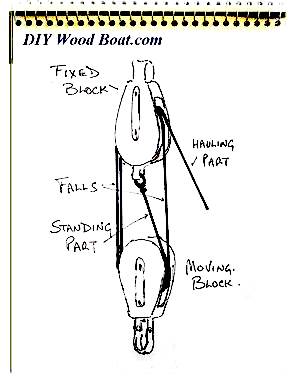
How Blocks and Tackle work to give mechanical advantage and how best to rig them.
Handy Billy a traditional rope and sheave rig.
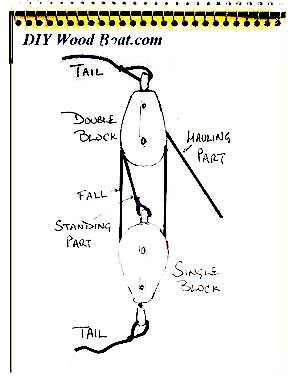
A Handy Billy made with two blocks and tackle can be used to give mechanical advantage wherever needed.
Recent Articles

-
Reader's Boat Photos
Aug 23, 25 09:08 AM
 Gallery of Readers uploaded Photos
 -
The Sliding Bevel
Jun 19, 25 02:52 AM
 By Robin Gates
The Sliding Bevel: A Boatbuilder’s Tool for Precision
For angles other than the perpendicular of the try-square and 45 degrees of a mitre-square, the essential measuring tool is a slidin…
-
Winter Bilge Issues
Jun 18, 25 07:34 AM
 By Adrian Morgan
Winter Bilge Issues: Can a Classic Boat Spend Too Long Ashore?
Beware the score of too long ashore, Adrian Morgan warns us…
Continue reading "Winter Bilge Issues"
You might like these
The Dipping Lug Sail
The dipping lug sail, is perhaps the most efficient and cheapest, type of sailing rig especially for small sailboats however it isn't as handy as the standing lugger or the balanced lugsail.
UV Strip for Furling Sails
UV Strip, notes on repairing, fitting and replacing a sacrificial UV protection strip on furling sails using acrylic or UV protected Dacron.
Sailing Rigs, a Guide to Sail Shapes.
The basic shape of the Sailing Rigs most commonly found on wooden sailing boats of every size.
Sail Cloth
About sail cloth and the different materials for DIY sail making and the average leisure sailor.
Sail Balance
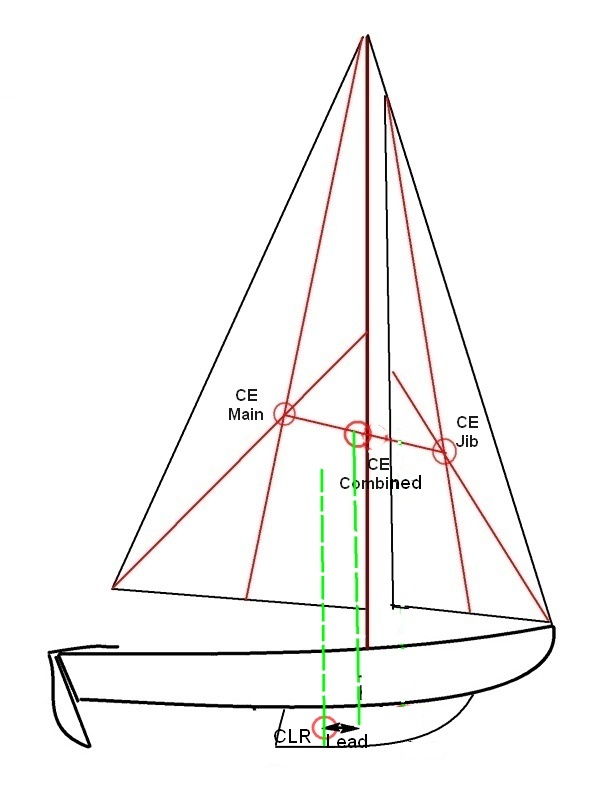
Notes on Sail Balance, designing a sailing rig, how set the relationship between the center of effort and the center of lateral resistance.
Lug Rigs for large and small sailboats.
Sailors have been using Lug Rigs for centuries because of their unique sailing abilities.
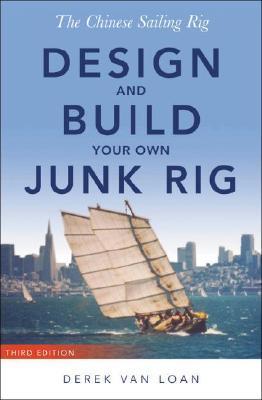
Junk Rig Conversion
Structural considerations for a Junk rig conversion of a wooden boat from bermudan rig to junk sail, where and how to site the mast.
Chinese Junk, the perfect cruising rig.
Chinese junk sail, why I rigged Mignonne with a Jukn Sail
The Balanced Lugsail
The balanced lugsail is one of the best traditional rigs for small boats, cheap and easy to rig and sail it is a practical alternative to more expensive bermudan rigs.
Junk Rig the ideal cruising sail.
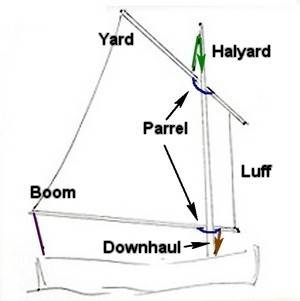
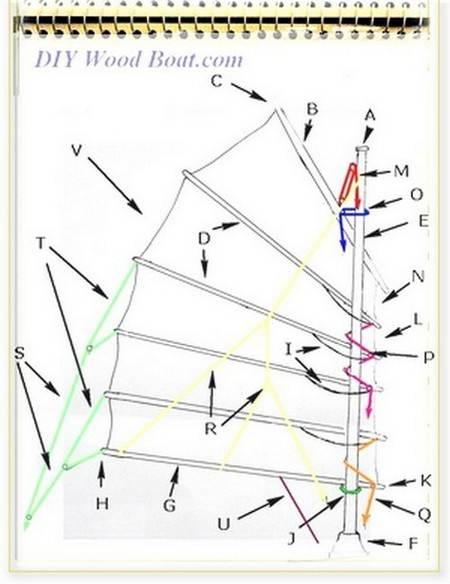
How to rig a western version of the Chinese Junk Rig the basic lines and controls.


This work is licensed under a Creative Commons Attribution-ShareAlike 2.0 UK: England & Wales License.
I am perfectly aware that the majority of Wooden Boat aficionados are sensible folk.
However, I need to point out that I am an amateur wooden boat enthusiast simply writing in order to try to help other amateur wooden boat enthusiasts.
And while I take every care to ensure that the information in DIY Wood Boat.com is correct, anyone acting on the information on this website does so at their own risk.