- Home
- Cabin Cruisers
- Ergonomics
- Bulkhead
- Cabin Trunk
- Dorade
- Panels
- Ventilation
Wooden Boat Ventilation
Good ventilation will allow air to circulate through your boat prolonging her life and making it more comfortable for the crew.
Wooden boats suffer less from condensation problems than GRP and metal
boats
due to the superior insulation properties of the wood.
However, good air circulation should not be ignored.
Lack of Ventilation .
The lack of ventilation below decks will lead to no end of problems.
- Fungi and dry rot will thrive.
- Corrosion will accelerate.
- Electrical wiring will degrade.
- Electronics will fail.
- Cameras and binocular lenses mist up.
- Aluminum will go powdery.
- Bronze turn green.
- Fastenings will bleed through flaking paint.
- And rust streaks will appear everywhere.
- Clothing becomes musty.
- Bunks are damp and mildewed.
- Foul bilge odors linger.
- Stale air will impair judgment.
- Heads will ache.
- Lack of fresh air will contribute to seasickness.
Air Circulation.
Effective boat ventilation must allow the air to circulate through as much of the below decks area as possible, fresh air in and stale air out.
It is no problem ventilating your boat when you are at anchor or moored on a sunny day.
Having the hatches and port-lights open will provide plenty of ventilation.
However, the real problem is when everything is closed up, either because you are at sea, the weather is bad or when you are not on aboard.
That is when ventilation on most boats is insufficient.
A single vent will not allow the air to flow.
A minimum or two well separated vents are needed to allow dry air to flow in and allow the damp air to escape.
Even when you are aboard, having vents in the heads and over the galley area will help remove lingering smells.
And an intake vent in the main cabin will maintain a steady flow of air keeping it cool in hot weather and in cold weather reducing the danger of carbon monoxide poisoning from a heater.
Fitting-out and Design.
There are many aspects of ventilation
and air circulation should be
taken into consideration at the design stage.
- How many and what type of vent to fit.
- Is ventilation to be active or passive?
- Passive systems use wind and air currents.
- Active systems are powered, such as solar and 12vDC vents.
- Consider venting chain lockers and lazarettes.
- Should hatch boards be louvered?
- Diaphragm pumps will suck air from the bilges.
- End horizontal surfaces such as work tops and cabin sole at the frames rather than tight to the planks, this will allow air to circulate. Use shallow fiddles to prevent dropped item ending up in the bilge.
- Position portholes so they won’t collect water, especially opening ports.
- Keep storage lockers, electrics and electronics away from openings where they might get wet.
Louvered Vents.
Louvered Vents can either be fixed open or hinged so they can be either open or closed.
Fixed louvers will allow air to pass but will prevent rain from entering.
The most basic and least expensive are the small vents for ventilating fuel lockers, bilges, deck boxes, lazarettes, behind electronics or fitted into hatch boards.
They are available in a variety of metals or even plastic.
Fixed louver doors are relatively easy to build from slats of wood and are an excellent option for lockers.
For hatch boards and vertical hatch doors individually hinged louvers can be shut to prevent water washing upwards through them.
Solar Vents.
Solar powered vents use an built in solar panel to run a small fan during daylight, some units also recharge internal batteries that allow the fan to run at night.
One solar vent can effectively exchange the air inside a small boat several times per day as long as it is pared with another suitably separated inlet vent.
You can install two or more, setting one to intake and the other to exhaust by changing the fan blades over.
Unfortunately while solar vents will keep out rainwater they won’t keep out green water.
But being solar powered they will not drain your 12 batteries.
affiliate links12 Volt Vents.
Dual speed 12vDC vents are among the most efficient topside vents.
However they should only be used on boats with multiple battery systems.
There are portable models that run o their own batteries which won't drain the ship's battery.
There are many fans available such as oscillating fans, compact models and fans that run on either 12vDC or their own batteries.
Dual 12vDC/Solar Vents use solar power during the day and run on the ships battery power at night to ensure a high air flow.
Bilge Blowers are really only necessary in motor boat with big engines to clear dangerous fumes from the bilge.
Hatches.
The favorite method for keeping the elements at bay while the main hatch is open, is with a cockpit dodger or spray hood.
Storm-boards will help keep breaking sea from getting below.
On my previous boat the bottom two boards slotted into place while the top one was hinged to the second, allowing for quick opening and closing.
A fore hatch which is hinged to open facing forward will be better at funneling air while at anchor.
Hatches can be ‘hinged’ so as be raised, removed, or propped up in any of four directions in order to scoop air.
Wind Scoops.

A wind scoop will encourage air to find its way below through an open hatch.
Usually they are made from light sail cloth such as an old spinnaker.
They can be suspended from a halyard with battens to help them hold their shape.
They should be easy to douse quickly should it rain as will happily funnel rain and spray below.
affiliate linksDorades.
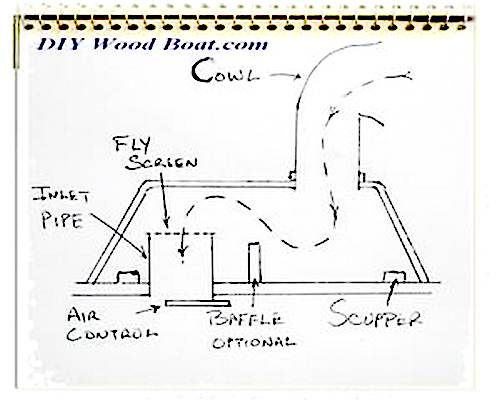
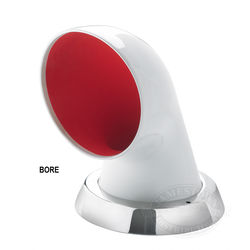
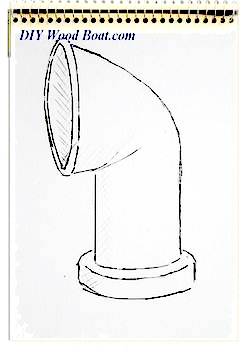
The most efficient all round passive vent is still the cowl vent with a dorade box.
The cowl is a vertical pipe with a bell-like horizontal opening which stands up from the deck and can be rotated to face into the wind.
The cowl on its own will also admit water so it needs a dorade box to keep this at bay is necessary over cabin areas.
A pair of decent sized dorade vents can be amazingly effective if one is facing into the wind and one away from the wind as an extractor.
For those making their own dorade boxes metal cowls in a variety of sizes can be bought from specialist chandlers.
However the flexible plastic varieties are an excellent alternative as they are less likely to foul lines and will be kinder to your shins.
Some of the plastic ones have a habit of turning brown in prolonged strong sunlight.
This however, can be touched up with the type of spray paint used for coating vinyl plastic.
NATIVE ASYNC

Previous posts
See What Others Have Posted
Dual solar and 12 volt vents who sells them ?
Years ago I had a solar vent that also had a 12 volt switch.
I do not see this type offered in the standard catalogs anymore.
About to lay up for …

Recent Articles


-
Wooden Boat Events 2024
Apr 14, 24 05:15 AM
Wooden Boat Events 2024 calendar, traditional and classic boat festivals and regattas from around the world
"Being hove to in a
long gale is
the most boring way of being terrified I know."
(Donald
Hamilton)
You might like these
Anchor Types
Anchor types, how to choose the type, size and style of ground tackle, chain and rode to anchor your boat safely.
Cruising in Wooden Boats, the Eco Lifestyle
Freedom wooden boat Cruising, adventure, boat handling, navigation safety for wood boat builders.
Anchoring Techniques
Anchoring techniques, best practices to ensure the safety of you and your boat, and how to retrieve a snagged hook.
DIY Boat Yards
DIY boat yards, do you know of or are looking for facilities and hard standing where wooden boats are welcome and where owners can do their own thing free from bureaucratic harassment.
Passage Planning for Small Boat Cruising
Passage Planning, a concise and easily understood cruise plan, for any of voyage from a dinghy trip around the bay to, cruising boat navigating an ocean.
Free Energy
Free Energy, electricity on board your boat and battery charging from the wind or solar a comparison.
Wind Vane Self Steering Gear for Sailboats
Wind vane self steering, what you need to know if you want to make your own windvane for singlehanded and shorthanded sailing on your wooden sailboat.
Foraging for Shellfish
Foraging for Shellfish, the original fast food, for taste, nutrition and availability, edible seafood from the seashore is hard to beat.
Overcoming Seasickness
How to overcome seasickness, mal de mer or motion sickness a review of some of the remedies, medications and natural precautions.
Edible Seashore Plants and Seaweed
Edible Seashore Plants and Seaweeds are free for the forager to gather, they tasty, nutritious foods that provide the perfect accompaniment to any seafood dish.
Sculling a Boat with a Single Oar.
Sculling, how to propel a boat or dinghy using one paddle or Chinese Yuloh at the transom.
Night Sailing
How to make night sailing a less stressful experience, boating at night can be magical with some of the most never to be forgotten moments






Recent Articles
-
Wooden Boat Events 2024
Apr 14, 24 05:15 AM
Wooden Boat Events 2024 calendar, traditional and classic boat festivals and regattas from around the world -
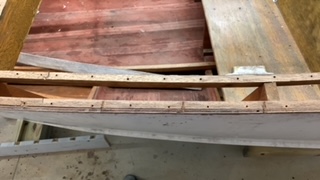
14’ 1956 Chris Craft, side rail how should it be attached?
Apr 12, 24 03:38 AM
 Removing the old side rail most of the screws went between the top deck/skin 1/4” plywood and the side of the hull. See photo, is this correct? I would
 -
How to laminate plywood on the hull
Apr 10, 24 03:46 AM
I'm working on replacing the bottom of 18' 1969 runabout that has a deep-V plywood hull. It had a 1/2 mahogany plywood bottom that they somehow got to


This work is licensed under a Creative Commons Attribution-ShareAlike 2.0 UK: England & Wales License.
I am perfectly aware that the majority of Wooden Boat aficionados are sensible folk.
However, I need to point out that I am an amateur wooden boat enthusiast simply writing in order to try to help other amateur wooden boat enthusiasts.
And while I take every care to ensure that the information in DIY Wood Boat.com is correct, anyone acting on the information on this website does so at their own risk.