- Home
- Your Boats
- Oars
Making Wooden Oars and Paddles.
Simple
wooden Oars and Paddles can easily be made at home.
Not only is rowing and paddling great exercise, it is also a lovely quiet way to travel without any noisy, smelly, environmentally unsustainable motors.
Finding the
correct size of balanced wooden sweeps or paddles for your boat is
not always easy.
By making your own you can tailor them to your needs and make them as simple or ornate as you desire.
Size.
One of the advantages of making your own set of oars is that you can make them oversize, try them out then, chop some off if necessary.
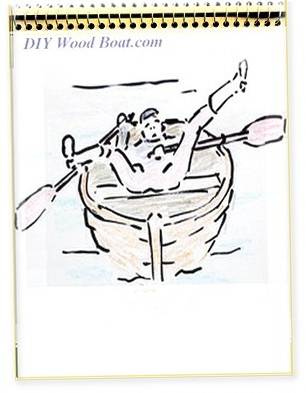
But to start you will need a rough idea of how long they need to be.
As a rough estimate measure the beam of the boat then double it.
However this is a very rough estimate, the optimum length will depend on a number of other factors.
Some of the factors to take into consideration are the boats freeboard, how much effort is required to move her and how directionally stable she is.
For instance a nice fine dory will slip along so, you will need a long oar in order just to keep pace.
At the other extreme an inflatable which isn’t directionally stable is better paddled with short fast strokes.
And a heavy slow boat will require something strong and of medium length.
It is also worth considering how much spring the shaft should have.
A stiff oar will be hard on the arms, however if it is too thin and whippy it may also be too fragile.
Type of blade.
Before drawing out the shape of your oar or
paddle consider the type of
blade which is best for your needs.
The natural assumption is that a large spooned blade would give more
propulsion
but this depends on the strength of the paddler.
A long narrow blade will be less tiring, easier for distance rowing,
will have
less windage and better balance.
And a flat blade will be easier to make. Many traditional sweeps and paddles had virtually no blades.
affiliate linksOar Making Tools.
A very adequate set of paddles can be built using just the minimum of basic handyman’s tools.
However if you want to make yours from solid blanks it will be much easier if you have access to a band saw.
The traditional tool for hollowing out a spooned blade is a 'bollow' plane, these have a convex sole and a blade curved to match.
These can still be bought or you could even make your own wooden 'bollow', or adapt a small wooden block plane.
There are also a variety of spoke shaves, rasps and draw knives such as those used by chair makers or coopers which are designed to scoop out.
For shaping the shaft a plane or drawknife can be used to take off the corners and round off with sandpaper.
Materials.
The most popular wood for oars and paddles is spruce as it is the lightest.
Fir and ash are more suitable when strength rather than weight is the priority.
However it may be worth considering making your blades from a hardwood if they are likely to be subject to a lot of abuse.
You will also need a good quality waterproof glue and something to make the ‘leathers’ from.
‘Leathers’ can, if you wish, be made form real leather however a neat binding of twine will do the job as will a length of suitably sized hose.
Then for finishing, the wood will need protecting with varnish or wood oil, you could use paint but why hide that lovely wood.
affiliate linksMaking.
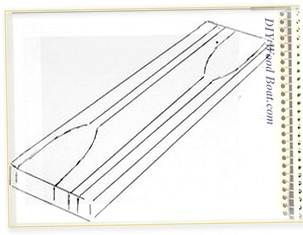
Here are three methods for making oars and paddles.
The first is for making a pair from one piece of pine board.
While this method may produce a pair well matched for weight and stiffness, it is rather wasteful of wood and won't be easy to cut without a band saw.
And to get sufficient board, free of knots and with straight grain, you may have to buy much more than you need.
Once cut, use a plane or draw knife and sander to work these pieces to their final shape.
The square handle can be planed along the corners to make them eight sided then planed again to make them sixteen sided, finally sanded to produce a cylindrical shaft.
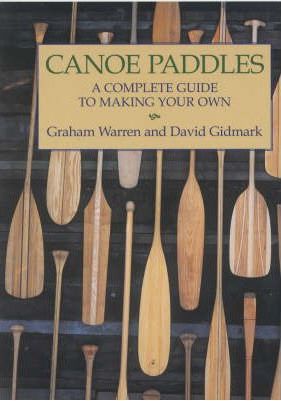

A much easier and more economical method is to use lengths of 2x2inch /50x 50mm straight grained Spruce or a similar timber.
You need two lengths equal to the finished length of your oar or paddle.
Plus two 2ft/600mm lengths for the blades.
Slice the short lengths diagonally to give two wedges.
Then clamp and glue these to the ends of the shafts.
You can do some shaping before gluing but leave the edges flat for ease of clamping.
Once the glue is set and the clamps are off, shape and taper but don’t leave a feathered edge.
The end of the blade can be bound with a copper strip (don't use too many tacks) or it can bound with a binding of twine.
Shape the last 6inch/ 150mm as a hand grip and add a ‘leather’ to the part which will go in the rowlock.
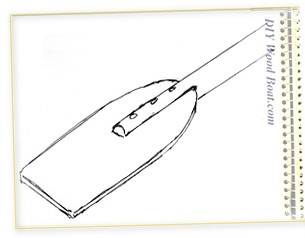
A very cheap and simple paddle can be quickly knocked together from a scrap of plywood and a wooden pole.
Simply cut a slot lengthwise in one end of the shaft.
Draw the paddle shape by folding some stiff card, transfer to the plywood and cut out.
Slot the blade into the slot in the shaft, drill three holes and through fasten.
Building a Sculling Paddle
This is how I recently built a quick, easy and rough sculling paddle.
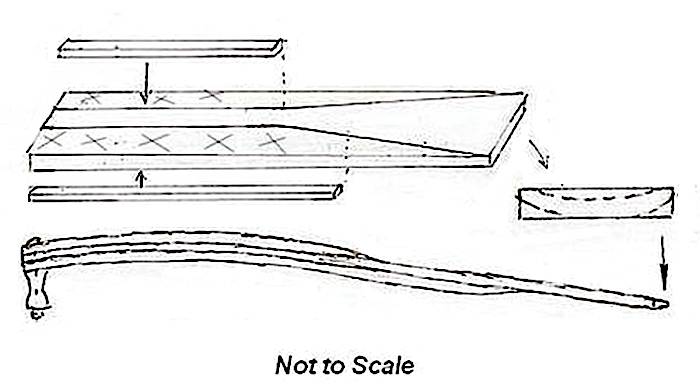
The bend in the shaft at roughly 1/3 of the distance from the handle end and at roughly about 20 degrees from the blade.
The bend was created while laminating the outer strips to the central shaped piece.
Below is how the paddle is used
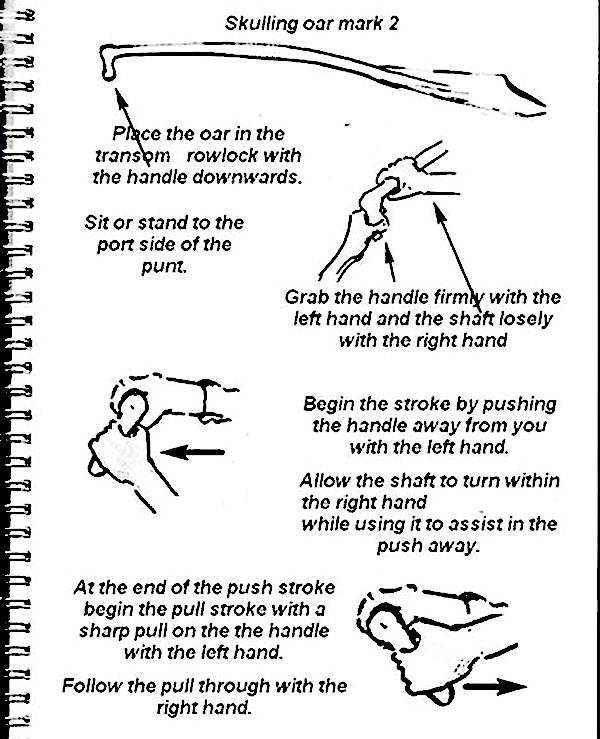
It can also be used very easily one handed by just holding the handle.
affiliate linksFinish.
Finish off with a good overall sanding, but don’t smooth the handles too much, leave a little grip.
If using varnish use three coats but don’t coat the handles, varnished handles are prone to causing blisters and calluses, it is better to soak them in something like Tung oil.
Varnish over any twine binding as it will help hold it in place.
Security.
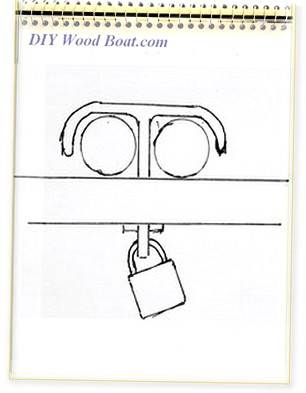
Rowing and paddling is thirsty work.
Sooner or later you are going to have to park your boat alongside the dock, so you can pay a visit to the local hostelry.
Most boaters in this day and age have come to terms with having to lock and secure their dingy with a padlock and some chain but what about the oars?
You could take them with you but not many bar owners will welcome you carrying a pair of wet paddles.
While you won’t stop a determined thief, a simple method of securing the oars will deter the prankster or opportunist.
I'm a believer in keeping such securities relatively light so that any determined thief won’t do too much damage.
Regardless of how cheaply or easily you have made your paddles, you don’t want to find them gone when you walk/stagger back to your boat.

Recent Articles


-
How to Make Multipurpose Wax Oil
May 13, 25 02:37 AM
 By Robin Gates
How to Make Multipurpose Wax Oil: Guide for Boat Builders
A Guide for boatbuilders on how to make multipurpose wax oil serving to lubricate tools and inhibit rust…
Continue reading "How…
You might like these
Boat Books for Wooden Boat Builders
Boat Books a series of boat books based on some of the 1960's, classic, Free Boat Plans that were published in magazines such as "Popular Mechanics", "Popular Science" and the "Boat Builder Handbook".
Ring Nails for Marine Fastening.
Ring Nails sometimes call Gripfast or ring shank, silicon bronze boat nails are renowned for their holding power. but how to get them out?
The Ashcroft Method of Planking a Wooden Boat
The Ashcroft method of building small wooden boats, an early from of cold moulding using thin layers of wood with the layers all running same direction.
Knotty wood, problems with boat building timber.
Knotty wood, how to avoid structural problems with knots in lumber when using softwood timber for fitting out and boat joinery
Build a Boat, tips for the DIY Wooden Boat Builder.
How to Build a Boat, Wooden Boat Building methods for the DIY, backyard, self-builders explained, carvel, lapstrake and plywood
Wood Screws for Boat Building and Repair.
Wood Screws are the most widely used and versatile fasteners used on wooden boats. Which type to use and how to use them
Wood, Environmentally Friendly Boat Building Lumber.
Make sure that the Wood that you buy and use is sustainably grown and harvested.
Timber, Lumber for Boat Building.
A brief description of the most common Timber used for building Wooden Boats how to choose wood for your project boat
Timber Properties
A brief guide to timber properties and wood, characteristics such as strength, stiffness and elasticity for choosing lumber for wooden boat building and restoration.
Rivets and Copper Rove Wood Boat Fastenings.
How to use Copper Rivets and Roves construction guide to fasteners on your wooden boat.

Recent Articles
-
How to Make Multipurpose Wax Oil
May 13, 25 02:37 AM
By Robin Gates
How to Make Multipurpose Wax Oil: Guide for Boat Builders
A Guide for boatbuilders on how to make multipurpose wax oil serving to lubricate tools and inhibit rust…
Continue reading "How…
-
Reader's Boat Photos
May 01, 25 08:32 AM
 Gallery of Readers uploaded Photos
 -
Award Winning Junk Rigged Micro Yacht
Apr 16, 25 02:54 AM
 By Nic Compton
Award Winning Junk Rigged Micro Yacht: Nikos Daroukakis’ Nootka
Inspired by an aboriginal mix of styles and boatbuilding philosophies, Nootka is a self-built, own-design combination of m…
You might like these
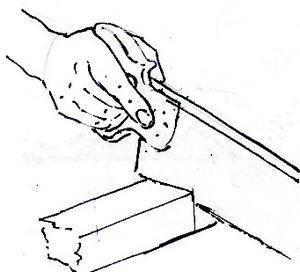
Using a Hand Saw
Using a hand saw, how to cut straight and square by hand with a wood saw.
Tool Care
Tool care, how to keep your boat tools rust free, shiny and sharp, especially those you keep onboard.
Sharpening and Honing
A guide to Sharpening and Honing woodworking tools, sharpening stones and strops for a keen edge.
Screwdrivers for DIY.
A bit about Screwdrivers and their use on wooden boat building projects.
Drilling Bits and Drills for Wooden Boat Building.
Drilling Bits, what you need to know about twist bits, augers, hole cutters, countersinks when building a wooden boat.
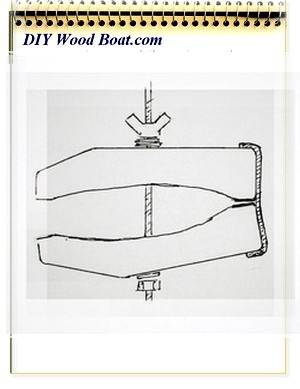
Clamps, for Boat Building
You can never have too many Clamps or Cramps when Wooden Boatbuilding. Or any other wood working project,extra hands for the woodworker.
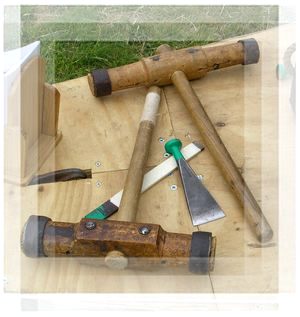
Caulking Irons.
A description of the tools needed if you are caulking a carvel boat. Including some you can make for yourself.
Spiling
Spiling the lining off or copying a curved shape, such as a plank using an intermediate object such as a straight line, a moulds edge, rule staff or a partial template.
Boatbuilding Tools for the Wooden Boat Builder.
The Boatbuilding Tools needed for building renovating or repairing wooden boats and how to sharpen and care for them.
Bench Planes, DIY tools guide.
Bench Planes for the wooden boat builder, the ones you are likely to need, a brief description of the various types.



This work is licensed under a Creative Commons Attribution-ShareAlike 2.0 UK: England & Wales License.
I am perfectly aware that the majority of Wooden Boat aficionados are sensible folk.
However, I need to point out that I am an amateur wooden boat enthusiast simply writing in order to try to help other amateur wooden boat enthusiasts.
And while I take every care to ensure that the information in DIY Wood Boat.com is correct, anyone acting on the information on this website does so at their own risk.