Wood Rot Repair and Treatment
When Wood Rot gets a gets into your boat timbers not only does the rotten wood need to be cut out but the surrounding timber needs treating to kill off the spores.
There are two main types of rot that infect wooden boats.
Both are caused by fungi growing within the wood tissue.
Types of Rot.
Wet rot; grows when unprotected timber is in constant contact with
moisture.
Dry rot; occurs when the unprotected timber has repeatedly been wetted
and then dried out.
However, the wood won’t rot just because it is wet but because the
rot fungi have the ideal conditions in which to grow.
They need moisture, oxygen, stable temperature and food in the form of
the wood fibers.
Given the right conditions they can grown and multiply rapidly.
However, even if the conditions change enough for the fungi to die out
their reproductive spores remain and become active if the right
conditions return.
Just like the dreaded teredo the fungi will take the easiest route
along the grain of the wood. It can also spread, via contact and
sometimes, the spores can travel through the air.
Boats are particularly vulnerable to both types of rot because of the damp environment, though salty water does go some way to slowing it down.
Prevention.
Prevention is, as they say, always better than a cure.
A neglected boat is the one most likely to suffer from wood rot.
So, regardless of how well you have protected the wood a little bit of time and care can save much work in the long run.
Keep her well ventilated even when in storage or on her mooring, make it a rule to check her every so often, open her up and allow the breeze to flow through, dry up any condensation and use a little white vinegar to get rid of mildew.
And don’t even think of shrink-wrapping her.
However, initially the surest way to limit the danger of wood rot is to ensure that all exposed timber is treated with an appropriate preventative.
There are numerous wood treatment products available, my own favorite is good old coal tar creosote.
It will depend on the type of construction as to what you can use, creosote being oily will not work with epoxy or some other coatings and glues.
And there are regions such as the European Union where the sale of creosote is limited (health and safety bureaucrats worried that we might drink it?).
The next stage in the armory is a good coating of primer and paint, the fungi won’t eat the wood if the spores can’t get in.
In many ways an all wooden boat can be less prone to rot than plastic boats.
Wooden boat owners tend to be more aware of the problem and take better care of their boats.
And many of the plastic variety of boat are often built with an untreated wooden frame work and wooden reinforcements, get a crack in the fiberglass and damp and rot will get in but not be seen until it is too late.
Prevention is all about understanding the nature of the fungi and reducing its ability to flourish.
The reason archaeologists can find extensive remains of ancient wooden boat is because the fungi has been unable to thrive.
It may have been that the timber has been lying in silt which has reduced the oxygen supply or the water temperature has been too low.
If the timbers are then removed from that protective environment and brought to the surface the archaeologists then hast to use some other form of protection to stop any spores in the wood from bursting into life.
Wood Rot Treatment.
If the worst has come to the worst and you have found some wood rot there is only one cure, cut it out and replace it with new wood.
Don’t be tempted by the products that promise to restore rotten wood, they cannot rebuild the damaged structure and therefore the strength, of the timber.
But before you replace it you need to kill off any wood rot fungus and spores in the surrounding, apparently sound, timber.
The infection can exist well beyond the obviously rotten area.
To treat this you will need a fungicide, a toxic substance to kill any fungi that may still be in the wood.
There are ready made products available. Just check that they kill the fungi and are not just preventative.
One inexpensive remedy is ethylene glycol which is found in the antifreeze used in cars.
This is toxic to most wood rot organisms and will penetrate quite deeply.
Or you could use a borate solution, Sodium Octaborate (Sodium Octaborate Tetrahydrate) can be bought either as a solution or as a solid which is mixed with water.
Any white residue left by a borate solution can be washed off with water.
Wood treated with glycol or borate can be finished or glued once it has dried completely.
affiliate linksSafety.
Apart form the dangers associated with fungicides and other nasty chemicals anyone working on a boat with severe rot should also be aware of the dangers from breathing in bacteria.
A boat that has been closed up for a long time should be well ventilated before beginning work.
And if working in enclosed areas it is advisable to wear a mask.
NATIVE ASYNC

Previous posts
See What Others Have Posted
Wood Rot
I am new at this venture so forgive my ignorance on the matter.
I have a 41ft 1962 Chris Craft that has soft spots and wood rot about a foot from the …
Antifreeze for killing rot spores. Drying time"
I've read a lot about using antifreeze for killing rot and took the leap.
My question has to do with the time of drying.
I have a cold molded …
Buying a Boat with Rot
I was wondering if breathing the mold/rot is dangerous.
Disinfecting it with the product you mentioned would, I suppose be adequately safe if one …
Rotted rib ends
I just bought a 1949 Penn Yan Trailboat.
In the process of removing the gunwales, I found that several of the ribs are rotted at the very ends, where …
Wood Treatment Method
It has been recommended to use glycol ethylene for wood rot treatment.
Is it o.k to use this on timber which has been glued with Balcotan or epoxy? …
Borates to fight Dry Rot
Ahoy,
Living on the Edge Those of you with older boats that have a few soft spots-
We had very good luck with using borates as a preservative …
Anti Freeze wood rot treatment discolouration?
I am writing in reference to my wife Ann Marie's boat Helios, featured on this site.
After reading the section on wood rot and its treatment, the …

Preventing rot in a wet bilge
I recently purchased a Picaroon II sailboat (featured
elsewhere on this site) , the hull of which is built of eastern white cedar strips, sheathed …

Recent Articles


-
Wooden Boat Events 2024
Apr 14, 24 05:15 AM
Wooden Boat Events 2024 calendar, traditional and classic boat festivals and regattas from around the world
You might like these
Woodboat Restoration questions forum
Woodboat restoration questions Forum, get advice about your Wooden Boat problems in a free, no frills, no need to sign up forum
Epoxy Resin for DIY Wooden Boat Building.
A guide to the epoxy resins and sustainable enrtopy resins to use when building wooden boats with marine plywood.
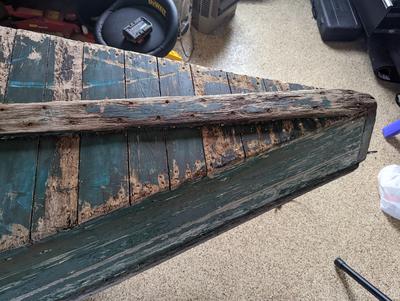
Vintage wood Boat Bottom Replacement
The ultimate bottom repair for a vintage wood boat, when re-caulking the planking on your classic antique boat
Recent Articles
-
Wooden Boat Events 2024
Apr 14, 24 05:15 AM
Wooden Boat Events 2024 calendar, traditional and classic boat festivals and regattas from around the world -
14’ 1956 Chris Craft, side rail how should it be attached?
Apr 12, 24 03:38 AM
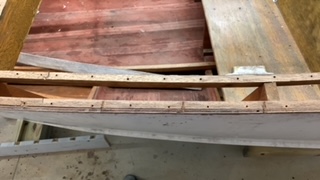
 Removing the old side rail most of the screws went between the top deck/skin 1/4” plywood and the side of the hull. See photo, is this correct? I would
 -
How to laminate plywood on the hull
Apr 10, 24 03:46 AM
I'm working on replacing the bottom of 18' 1969 runabout that has a deep-V plywood hull. It had a 1/2 mahogany plywood bottom that they somehow got to


This work is licensed under a Creative Commons Attribution-ShareAlike 2.0 UK: England & Wales License.
I am perfectly aware that the majority of Wooden Boat aficionados are sensible folk.
However, I need to point out that I am an amateur wooden boat enthusiast simply writing in order to try to help other amateur wooden boat enthusiasts.
And while I take every care to ensure that the information in DIY Wood Boat.com is correct, anyone acting on the information on this website does so at their own risk.