- Home
- Restoration
- Buying a Boat
- Initial Survey
The Initial Survey.
Normally
the point of a boat survey
would be to ascertain if a boat was seaworthy and worth the asking
price.
However if you are buying cheap, with a view to restoring or rebuilding her, then your survey will have a different perspective.
What you want to know is
- How much work needs to be done?
- Will it be within your capabilities?
- Can you devote enough time to what needs doing?
- Will it be affordable?
- And will she be worth taking on?
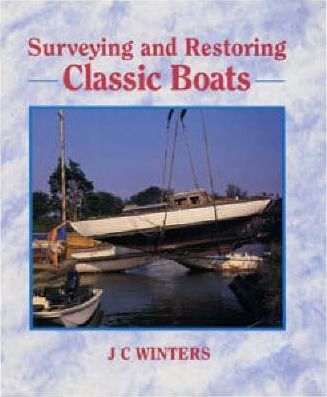
Buying a wooden boat is a bit like getting married.
You’ll get lots of advice but will probably ignore most of it in the heat of passion.
And yea, I must admit that I’m as much a sucker for a graceful sheer-line and neat turn of the bilge as anyone (boats as well as women).
But for what it’s worth here is my advice on that fateful first meeting.
Now first impressions, despite what ‘they’ say are important.
Stand back take a good long look at her from all angles and consider her potential.
Can you see yourself loving, honoring, and cherishing her?
No?
Then forget it.
If you are going to spend time effort and cash renovating a boat you are going to need passion and love.
However, she will also need to fit your imagined needs, what ever they are.
And do try please to be realistic.
There are preservation societies which will rebuild a boat from a few blackened timbers dug out of a bog. But they will probably have hundreds of volunteer helpers, government grants and unlimited time.
So, you’ve met a pretty boat will she be worth marrying/buying?
It is time for a reality check, time to do some poking around.
Survey Equipment
Whenever you go to look at a
boat take with you
- A camera, so that you can take home actual images to reflect on.
- A torch, so you can inspect those dark corners where all sorts of nasty stuff can hide.
-
A Large Screwdriver, preferably one with a wooden
handle.
This can be used to tap for unsound wood as well as to poke for soft areas and even unscrew panels. - A Rechargeable Screwdriver will make the unscrewing of any panels quick and easy.
- A notebook and pen or pencil to record any impressions.
And talking of impressions, if the seller is with you and you have
turned up equipped and looking as though you know what you are doing,
he might be less inclined to bullshit.
Best not to take your cheque book on the first visit.
First Impressions Outside

A boat which is
being sold cheaply because it needs some work doing on it will most
likely look
dirty, have peeling paint maybe some moss growing on it.
Try to see beyond this. Its best to have a first look at her without
any
covering, but do consider how she has been covered.
Has the covering kept the rain out of her?
Sea water might ‘pickle’ the wood, but any fresh water which has
been allowed to collect inside her will result in rotten timbers.
On the other hand, if she has not been allowed any ventilation for any
length
of time, condensation will have collected and could be just as
devastating.
If
she has been freshly painted, be even more wary.
What is that new paint covering up?
Anti-foul, bottom paint would normally be applied just prior to
launching.
Proper bottom paint is expensive, so if it has been applied prior to
putting
her up for sale, it might have been done to hide something, be
suspicious.
Has the boat been sheathed, if so ask you self why?
I don’t care what
it
has been sheathed with, be it concrete or glassfiber, the only way to
find out
if the wood below the sheathing is sound will be to strip it all off.
Does the boat appear to sag at the ends? If she does it probably means
she is
‘hogged’.
Walk away now because this means her backbone needs replacing.
Make a note of any obvious damage, has it been caused by old age and
neglect or
by a collision.
Take a photo.
Has the collision caused damage to the underlying structure?
Have a good check around the planking especially the bottom boards, the
garboards and the stem.
Tap the wood with the handle of that screwdriver.
Don’t at this stage be tempted to poke or prod at suspect areas.
The owner won’t be very impressed with you if you cause any damage,
regardless of whether the wood was rotten under the paint.
Take a photo, make a note to go back to those areas later.
First Impressions Inside.
Assuming that you are looking at a cabin cruiser and the outside view is not too off putting, open the hatch and go below.
What doe she smell like inside? Damp and mildewed?
Um, that means damp and probably plenty of rotten wood as well.
Now remember that you are here to assess the amount of work that needs doing to make this a safe and sound boat, one that floats, how she is laid out isn't your main concern at this stage.
Have a look under the cabin sole, that’s why you’ve brought your torch. Is there water lying in the bilges? Is it salt water or rain water?
Now use that torch to peer into as many nooks and crannies as you can.
It is these out of the way places which, because they are difficult to get at, may not have been maintained as well as they should.
Open the lockers and drawers try to see what’s behind.
However, be warned you probably won’t be able to see everything.
Go Home
No matter how besotted you have become at this stage, don’t commit yourself.
Go home with your notes, impressions and those photos.
Try to make a realistic estimate of
- How much work will be needed to put her right.
- How long it will take you.
- How much it will cost.
- How much you are willing to pay for her.
Then double or perhaps even treble your repair estimates, then think again.
Don’t buy her just yet.
Now you want a more in depth survey.
If you want a second opinion take a pal with you.
If you are about to spend mega bucks on her you might just want a professional survey.
Bear in mind that professional surveys are expensive and the surveyor will want paying whether or not you buy the boat.
If you do think that this is the way to go, make sure that the surveyor understands wooden boats and why you are intending to buy her.
Most surveyors these days spend all their time looking at plastic boats for buyers who want one that is ready to sail away in.
Make a Date
What to look for on your Second date.
Assuming that you are going to
do the surveying yourself,
get as much information as you can.
- Hopefully, by checking through the for sale ads you will have developed a feel for values.
- If the boat is a recognised design then check boating magazines for buying tips. Many of them have buyer’s reports for specific boats which highlight things to watch for.
- Learn as much as you can about the problems associated with wooden boats.
- And plan to spend all the time you need checking her, all day if necessary. And preferably without the owner breathing down your neck.
NATIVE ASYNC


Recent Articles


-
Wooden Boat Events 2024
Apr 14, 24 05:15 AM
Wooden Boat Events 2024 calendar, traditional and classic boat festivals and regattas from around the world
“When a great adventure is launched with a powerful thrust, fatigue in the muscles and doubts in the mind are swept away by a fullness that moves life along like a breath from the depths of the soul.”
(Bernard Moitessier)
You might like these
Woodboat Restoration questions forum
Woodboat restoration questions Forum, get advice about your Wooden Boat problems in a free, no frills, no need to sign up forum
Epoxy Resin for DIY Wooden Boat Building.
A guide to the epoxy resins and sustainable enrtopy resins to use when building wooden boats with marine plywood.
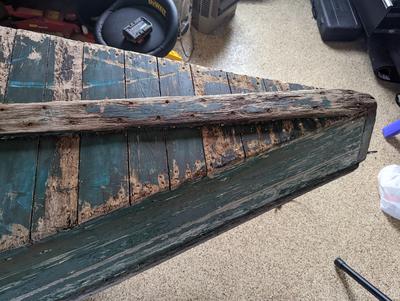
Wood Rot Repair and Treatment
Wood rot in wooden boats, how to treat, repair and replace rotten timbers in a wooden boat
Vintage wood Boat Bottom Replacement
The ultimate bottom repair for a vintage wood boat, when re-caulking the planking on your classic antique boat
Surveying a wood boat
The problem areas to look out for when surveying an old wooden boat.
Stem and Stern Post Rebuilding
Repairs to the Stem of a wooden boat can be undertaken by the amateur with a little care and attention.
Repair Plywood Boats.
How to repair plywood rot or delamination with marine ply, especially on the hull of a small boat.
Planking a Carvel Boat
How to replace damaged or unsound carvel Planking, a guide for any reasonably competent amateur.
Wedge Seam Construction
Wedge Seam Construction method for wooden boat building and glued wedging or ‘splining’ as a restoration technique for restoring old carvel planking seams.
Applying Glass Cloth to Wood Boats.
Some advice on applying glass cloth to wooden boats
Iron Keel Rust Removal
Keel rust, how to remove rust from an iron keel and treat it prior to repainting your wooden boat restoration project.
Wooden Bung Removal
Wooden Plug or Bung Removal, how to clear the plugs covering the fastenings when restoring or repairing a wooden boat


Recent Articles
-
Wooden Boat Events 2024
Apr 14, 24 05:15 AM
Wooden Boat Events 2024 calendar, traditional and classic boat festivals and regattas from around the world -
14’ 1956 Chris Craft, side rail how should it be attached?
Apr 12, 24 03:38 AM
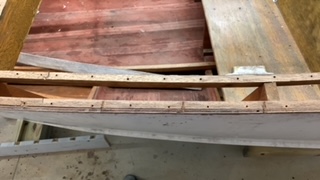
 Removing the old side rail most of the screws went between the top deck/skin 1/4” plywood and the side of the hull. See photo, is this correct? I would
 -
How to laminate plywood on the hull
Apr 10, 24 03:46 AM
I'm working on replacing the bottom of 18' 1969 runabout that has a deep-V plywood hull. It had a 1/2 mahogany plywood bottom that they somehow got to


This work is licensed under a Creative Commons Attribution-ShareAlike 2.0 UK: England & Wales License.
I am perfectly aware that the majority of Wooden Boat aficionados are sensible folk.
However, I need to point out that I am an amateur wooden boat enthusiast simply writing in order to try to help other amateur wooden boat enthusiasts.
And while I take every care to ensure that the information in DIY Wood Boat.com is correct, anyone acting on the information on this website does so at their own risk.