- Home
- Boat Building
- Restoration
- Hull Shape
Wooden Boat Hull Shapes
It
is the Hull Shape of a boat that
determines the nature of the vessel.
It is fundamental to her size, stability, seaworthiness, speed through the water and maneuverability.
Building, restoring and maintaining even the smallest wooden boat takes a good deal of effort, so it is worth making sure that you chose a hull shape to suit your needs.
Chined and hard-chined Hull Shapes.
Chined
hulls are those built from
flat sheets set at an angle to each other.
These are among the easiest hulls to build and are the basis of most
plywood
boat designs.
There are three basic categories of chined hulls;
Flat bottoms
Broad flat bottoms are
ideal for
stability.
However, this flat, bottom will give a rough ride at high speed.
So, this type of hull is most suitable for low speed boats, such
asrowing
dories and dinghies or where shallow draft is a must.
Many flat bottomed dories have successfully been rigged for sailing by
adding a
keel.
The flat bottom hull is one of the easiest hull to build.
And because they are easy to build, they are likely to be
less-expensive than
other hull shapes.
They have excellent initial stability as well as a great deal of interior volume.
V bottom
A deep V is another
simple hull to
build.
However, deep V hulls tend to pitch more than any other hull shape,
especially
if they have canoe sterns.
Most successful V bottom boats are a modification on the basic V.
While the pointed bow will slice through the waves, the aft end needs
to
flatten out towards the transom to soften the pitching.
Some "V"-bottom power boats have the very bottom flattened to allow it
to plane
at speed.
The hull of a hard chined power boat, like the flat bottomed boat has
excellent
initial stability.
However, the V bottom is generally stronger and is much better at coping with any pounding.
Multi Chined
These hulls use more but narrower boards in an attempt to compromise between hard chine and rounded bottoms.
Round bilged.
Rounded bottom hulls are usually displacement hulls.
While the round bilge is the most versatile hull shape it is also more difficult to build and consequently more expensive.
These hull shapes however tend to be more maneuverable at slow speeds.
Rounded hulls range from U or barrel shape to wine glass and Y shapes.
Without a keel and either a skeg or deadwood at the aft end this hull shape will roll and be subject to excessive leeway.
There are also many hull designs which are a compromise between the round and hard chined in an attempt to gain the best from both shapes.
Displacement.
Displacement hulls are those where the hull is supported exclusively or predominantly by buoyancy.
In other words the hull pushes through the water rather than skimming over the top as in a planing hull.
This means that their speed is dependent on the waterline length.
Hull speeds vary at around 1 to 1.5 times the square root of the waterline length.
Displacement is a measure of the amount of water displaced by the hull, this also determines the carrying capacity.
Semi-displacement / semi-planing.
These hulls combine speed with sea-worthiness.
While they depend on buoyancy at slow speeds they are capable of developing a moderate amount of dynamic lift at higher speed.
Normally they are a combination of a V shape at the bow which becomes a flatter bottom towards the stern.
The bilge chine is normally quite pronounced for stability and ease of building.
Planing.
Planing hulls are designed to run on the surface the water at high speeds.
Dynamic lift generated at speed raises them, which reduces area of the wetted surface thus reducing drag.
The most common design will have at least one chine to help planing.
However, in gaining speed this hull shape will forfeit maneuverability at slow speed, will be vulnerable to leeway and pound on waves.
It will also require extra power to get it up onto the plane.
The hull shapes vary from flat bottomed, to V bottomed and sometimes even a rounded bilge.
Multi-Hulls.
One of the main advantages of the multi hull is its stability.
A sailing proa for instance would be completely unstable without its outrigger.
There are also performance advantages.
At slow speed a multi hull with the same total displacement as a mono-hull will be less efficient as there is a greater wetted surface area.
However, the multi-hull will be less prone to heel.
At higher speeds the narrowness of the hulls, compared to the beam, will allow for an increased hull speed.
The trimaran is often an attempt to combine stability with a more capacious main hull.
Increasing the distance between the hulls with a wider platform will increase stability and accommodation but brings with it the problem of structural strength.
And don't forget that the mooring charges for multi hulls are generally higher than foe mono hull shapes.
Above the Waterline.
The shape of the hull above the waterline will also have an effect on how she handles.
But as with most things on a boat there is an amount of compromise to be made.
High freeboard will add windage and leeway, however, it will increase the size of the accommodation and load carrying ability.
Load carrying is important factor for cruising boats.
Flared topsides especially at the bow are not just for looks.
They also help to reduce pitching.
The extra buoyancy in the flare helps to stop the bow digging in as it cuts through the waves.
Another reason for having more beam and buoyancy aft is because often that is where much of the weight, such as engines and people in the cockpit, tends to be concentrated.
NATIVE ASYNC


Recent Articles


-
Wooden Boat Events 2024
Apr 14, 24 05:15 AM
Wooden Boat Events 2024 calendar, traditional and classic boat festivals and regattas from around the world
You might like these
Plywood and Veneer Guide for Marine use.
A guide to plywood for boat building and why you should use the best marine grade you can afford.
DIY Woodboat Building Questions
Woodboat building questions a Forum for wooden boat building, plans, lumber, caulking compounds and other boat building problems.
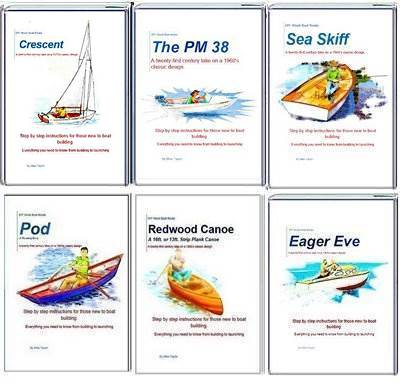
Boat Books for Wooden Boat Builders
Boat Books a series of boat books based on some of the 1960's, classic, Free Boat Plans that were published in magazines such as "Popular Mechanics", "Popular Science" and the "Boat Builder Handbook".
Build a Boat, tips for the DIY Wooden Boat Builder.
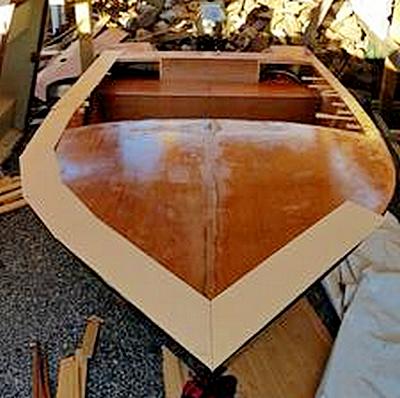
How to Build a Boat, Wooden Boat Building methods for the DIY, backyard, self-builders explained, carvel, lapstrake and plywood
Clench Nails, Fastening for Small Wooden Boats.
How to use Clench Nails, these provide a fast reliable method for fastening small wooden boats.
You might like these
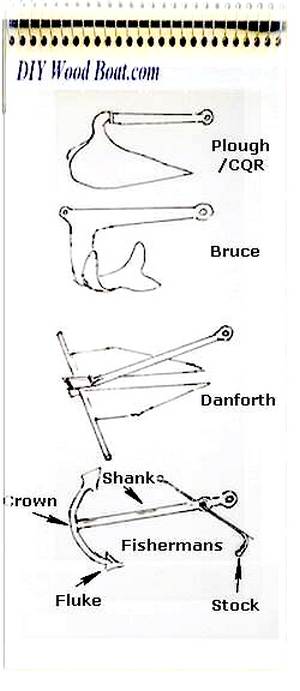
Anchor Types
Anchor types, how to choose the type, size and style of ground tackle, chain and rode to anchor your boat safely.
Cruising in Wooden Boats, the Eco Lifestyle
Freedom wooden boat Cruising, adventure, boat handling, navigation safety for wood boat builders.
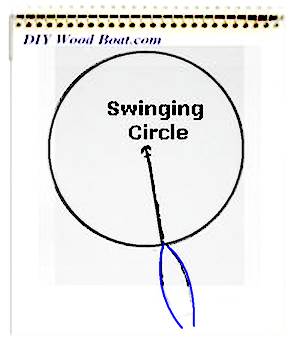
Anchoring Techniques
Anchoring techniques, best practices to ensure the safety of you and your boat, and how to retrieve a snagged hook.
DIY Boat Yards
DIY boat yards, do you know of or are looking for facilities and hard standing where wooden boats are welcome and where owners can do their own thing free from bureaucratic harassment.
Passage Planning for Small Boat Cruising
Passage Planning, a concise and easily understood cruise plan, for any of voyage from a dinghy trip around the bay to, cruising boat navigating an ocean.
Free Energy
Free Energy, electricity on board your boat and battery charging from the wind or solar a comparison.




This work is licensed under a Creative Commons Attribution-ShareAlike 2.0 UK: England & Wales License.
I am perfectly aware that the majority of Wooden Boat aficionados are sensible folk.
However, I need to point out that I am an amateur wooden boat enthusiast simply writing in order to try to help other amateur wooden boat enthusiasts.
And while I take every care to ensure that the information in DIY Wood Boat.com is correct, anyone acting on the information on this website does so at their own risk.