- Home
- Boat Building
- Restoration
- Rivets
- Wood Screws
- Clench Nails
Copper Clench Nails
Copper
clench
nails are an excellent method of
fastening, for small boats.
Though perhaps not quite as good riveting, it is a much faster method.
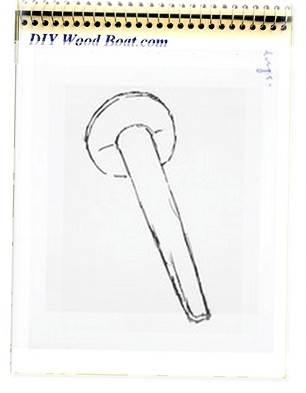 Copper Clench Nail
It is certainly more than adequate a fastening method for light
scantlings.
And it can be quite easily done by one person.
These nails are particularly useful for fastening the laps between lapstrake frames.
A proper clench nail should have a chisel shaped point.
They should be sharp enough to penetrate the wood when clenched over.
But not so fine as to allow the point to curl when being driven.
In the absence of proper clench nails, copper boat nails can be used.
Clip the boat nail off at an angle sloping away from the direction you are going to clench it.
Then tap it on the end to produce a barb.
The only tools required for clenching are
- A light hammer to drive and clench the nails.
- A drill fitted with a slightly undersized bit for boring the pilot holes.
- And a 'dolly' / 'holding' / 'bucking' iron, a large hammer head will do, or any rounded lump of iron.
The
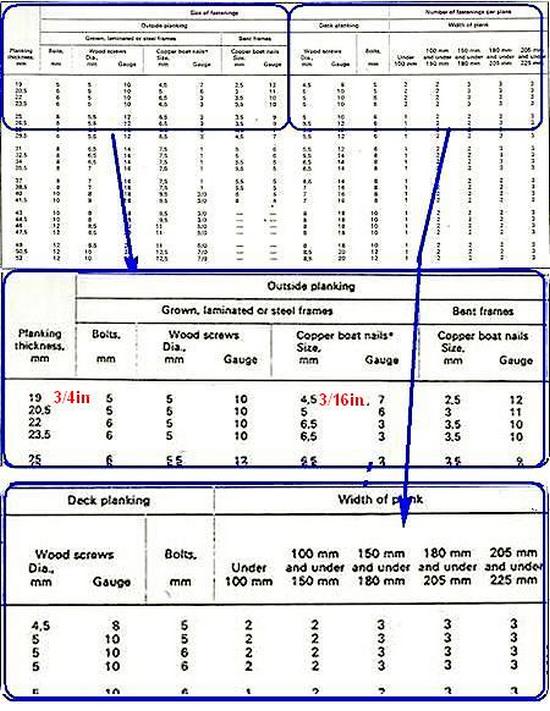
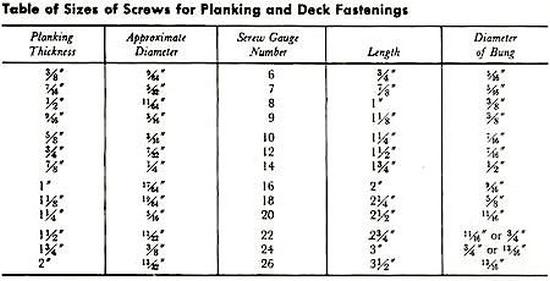
size of the nails will depend on the size of the scantlings, you will
need
enough of the point protruding to be able to clench it over into the
wood.
- First clamp frames/stock in place.
- Next drill the pilot hole for the nail, this will reduce the hammering required and avoid the danger of splitting the wood. Light construction doesn't like too much hammering.
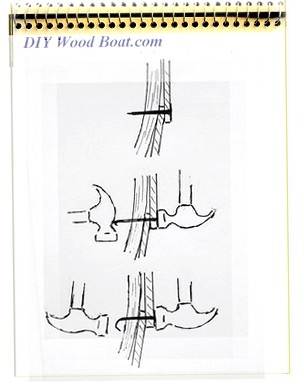
- Either use the 'bucking iron' to curl the nail back on itself as soon as it emerges from the wood.
- Or drive it right through then place the 'bucking iron' on the head and use the hammer to curl the nail.
- When the point enters the wood hammer it flush.
- It is best if the nail is clenched slightly across the line of the grain rather than along it.
- A few light taps with the hammer will draw the frame onto the plank.
Although it will be much faster to work with two people, one nailing and one wielding the 'bucking iron', this is a job that can easily be done by one person working alone.
affiliate linksHerreshoff's
Rules for the Construction of Wooden Yachts, Clench Nails
NATIVE ASYNC


Recent Articles


-
Wooden Boat Events 2024
Apr 14, 24 05:15 AM
Wooden Boat Events 2024 calendar, traditional and classic boat festivals and regattas from around the world
"Cruising has two pleasures.
One is to go out in wider waters from a sheltered place.
The other is to go into a sheltered place from wider waters."
(Howard Bloomfield)
You might like these
Plywood and Veneer Guide for Marine use.
A guide to plywood for boat building and why you should use the best marine grade you can afford.
DIY Woodboat Building Questions
Woodboat building questions a Forum for wooden boat building, plans, lumber, caulking compounds and other boat building problems.
Boat Books for Wooden Boat Builders
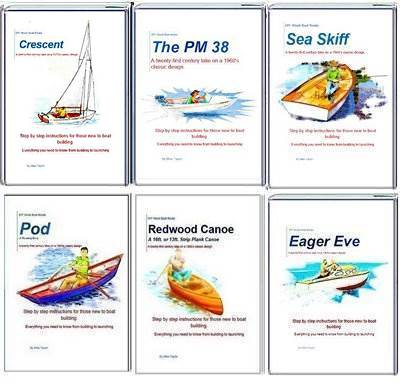
Boat Books a series of boat books based on some of the 1960's, classic, Free Boat Plans that were published in magazines such as "Popular Mechanics", "Popular Science" and the "Boat Builder Handbook".



This work is licensed under a Creative Commons Attribution-ShareAlike 2.0 UK: England & Wales License.
I am perfectly aware that the majority of Wooden Boat aficionados are sensible folk.
However, I need to point out that I am an amateur wooden boat enthusiast simply writing in order to try to help other amateur wooden boat enthusiasts.
And while I take every care to ensure that the information in DIY Wood Boat.com is correct, anyone acting on the information on this website does so at their own risk.